Every fall, a familiar wave of Midwest residents starts packing for Southwest Florida. Ohio and Michigan are two of the largest sources of snowbirds heading to the Fort Myers and Naples area, drawn by mild winters, Gulf Coast beaches, and easy access through Southwest Florida International Airport. Whether you are heading south for a few months a year or making the move permanent, the logistics look different from a typical one-time relocation.
This checklist walks through what actually needs to happen, and when, to get from Ohio or Michigan to Fort Myers or Naples without the last-minute scramble that catches so many first-time snowbirds off guard.
How Far Is the Move, Really
From Northeast Ohio, the drive to Fort Myers or Naples covers roughly 1,150 to 1,250 miles, depending on your exact starting point and destination, with a drive time of about 19 to 21 hours. From most of Michigan, add another leg to that trip, with totals closer to 1,250 to 1,350 miles and drive times pushing past 21 hours. Both routes typically run south through Ohio or Michigan, into Georgia, and down through central Florida before reaching the Gulf Coast.
For a professional mover, that translates to a transit window of roughly three to eight days from pickup to delivery, depending on the season, your mover’s routing, and whether your shipment is consolidated with other households on the same corridor.
Fort Myers or Naples: Does It Change the Move Itself
Both cities sit along the same stretch of Southwest Florida coastline, roughly forty minutes apart, and share the same regional airport, so the moving logistics themselves are nearly identical regardless of which one you are headed to. The differences that matter more show up in the type of housing you are likely moving into.
Naples skews toward higher-density condo and gated community living, particularly in and around Old Naples and the barrier islands, which often means stricter HOA move-in requirements and more building-access logistics to coordinate in advance. Fort Myers and the surrounding areas, including Cape Coral and Estero, offer a broader mix of single-family homes alongside condo living, which can simplify some move-in coordination but does not eliminate it entirely, especially in the area’s many active adult and golf communities with their own HOA rules.
Either way, confirming your specific building or community’s requirements early remains one of the most important steps on this checklist, since it is also one of the easiest to overlook until moving week is already here.
Decide Seasonal or Permanent First
Before anything else gets booked, settle whether this is a seasonal move or a permanent one, since it changes almost every decision that follows.
A seasonal snowbird move usually means a lighter shipment, since many snowbirds furnish their Florida home separately and only bring clothing, electronics, and a handful of personal items each way. A permanent move means treating this like any other full household relocation, with everything from furniture to garage contents making the trip south.
If you are somewhere in between, keeping a primary residence in Ohio or Michigan while spending significant time in Florida, it is worth deciding early what stays behind in climate-controlled storage versus what travels with you each season. That decision affects your moving cost far more than the distance does.
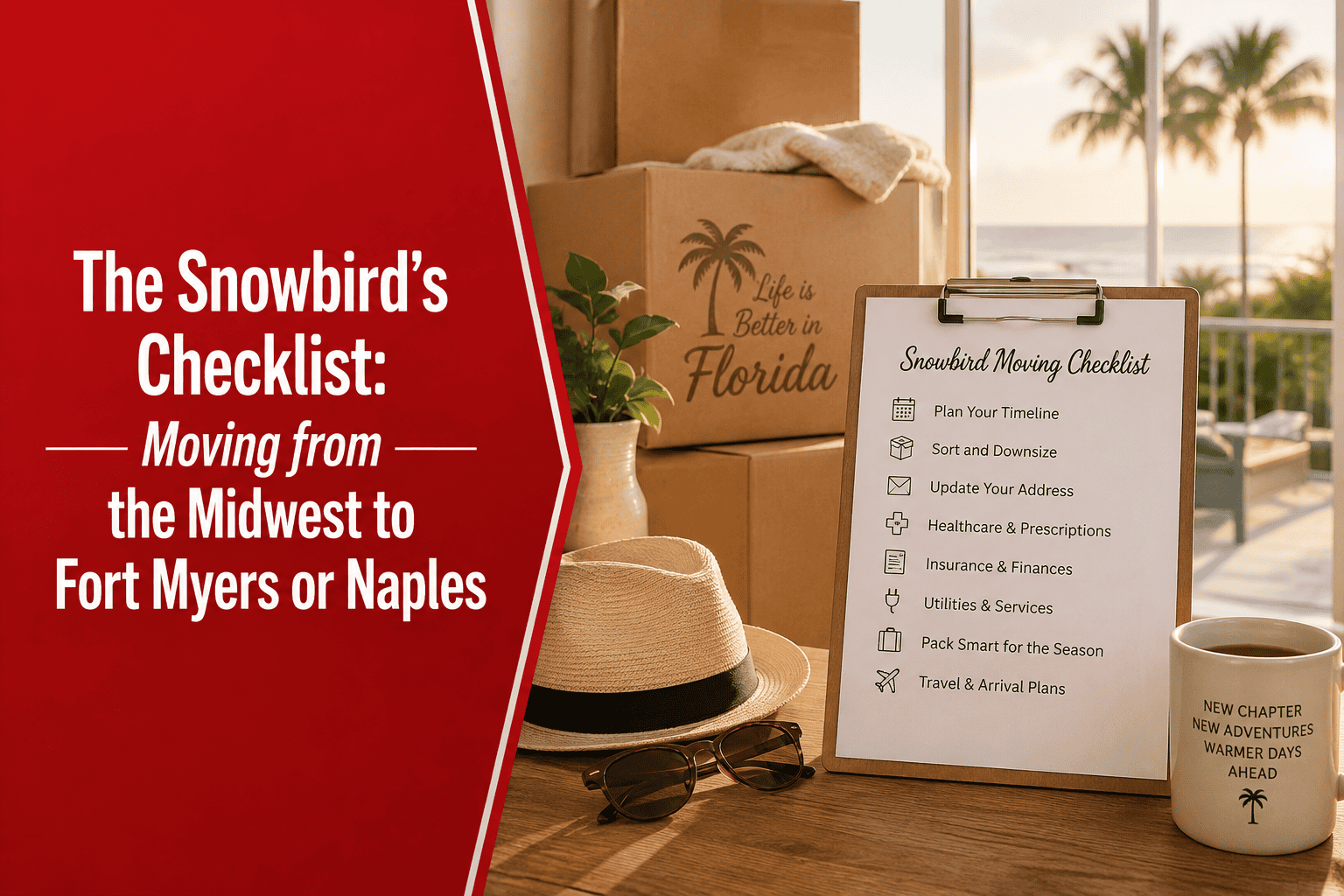
The Snowbird’s Moving Checklist
Three to six months out
Confirm your HOA or condo association’s move-in requirements. Many Fort Myers and Naples condo buildings require advance notice, elevator reservations, and certificates of insurance from your moving company before they will allow a move-in date. Starting this paperwork early helps you avoid a scheduled move date with nowhere to unload.
Decide how your vehicle is getting south. Driving it yourself, having a family member drive it, or arranging vehicle transport alongside your household goods are all common options, and vehicle transport tends to book up fast during peak snowbird season.
Sort your belongings into what makes the seasonal trip, what goes into storage, and what you’ll sell or donate. This is also a good time to review your homeowner’s or renter’s insurance coverage for both properties, since a home sitting empty for months at a time often needs specific coverage that a standard policy will not include.
Six to eight weeks out
Book your movers. This is the single most important timing decision on this list. Late October through November and again in April through May are the two busiest windows of the year on this route, as the entire snowbird population moves south for winter and back north for summer within the same few-week stretch. Waiting until a month out during either window often means limited availability and higher prices.
If part of your household is staying behind in Ohio or Michigan, arrange storage now rather than after your movers have already loaded the truck. Climate-controlled storage matters more than people expect for anything sensitive to humidity or temperature swings across a Midwest winter.
Start setting up utilities, internet, and mail forwarding for your Florida address. Many snowbirds forget that mail forwarding through the postal service works differently for a seasonal address than a permanent one, so a P.O. box or a mail forwarding service built for part-time residents is often worth the extra step.
Two to four weeks out
Confirm your moving date and delivery window in writing, along with your building’s elevator reservation or loading dock access if you are moving into a condo or high rise, which is common throughout both Fort Myers and Naples.
Finalize what is traveling in the moving truck versus what you are carrying yourself, particularly medications, important documents, and anything you will need immediately upon arrival before your shipment is delivered.
The week of your move
Do a final walkthrough of both the Ohio or Michigan property and confirm delivery instructions for the Florida address, including any gate codes, parking restrictions, or building access windows your movers will need on delivery day.
Timing Around Hurricane Season
Southwest Florida’s hurricane season runs from June through November, which overlaps with part of the shoulder season for snowbird moves. If your schedule allows any flexibility, moving in the fall means keeping an eye on storm activity as your date approaches, and building in a few days of buffer around your planned move is a reasonable precaution, not an overreaction. Movers experienced with this corridor are used to adjusting delivery windows around weather when needed, but starting the conversation early with your moving company gives everyone more room to work with if a storm does move through.
Choosing a Mover for a Seasonal or Permanent Move
Not every moving company is set up to handle the back-and-forth nature of a true snowbird relocation, particularly if you plan to repeat the trip every year. Eyring’s long-distance moving service handles both permanent relocations and seasonal moves for households splitting time between Ohio and Florida, with crews who understand the realities of condo move-ins, storage coordination, and the tight scheduling windows of peak snowbird season.
For a full breakdown of what an Ohio-to-Florida move costs and how long it takes, see Eyring’s guide to moving from Ohio to Florida, which covers the route in more detail beyond the snowbird-specific timing in this checklist.
Planning Your Move South
Eyring Movers has served communities near Avon and throughout the Cleveland area since 1897, and our long-distance team works with snowbirds and permanent Florida transplants every season. If you are planning a move to Fort Myers, Naples, or anywhere else along the Gulf Coast, the earlier you start this checklist, the smoother your move date will go.
Frequently Asked Questions
When should I book movers for a snowbird move to Fort Myers or Naples? Book at least six to eight weeks before your move date, and earlier if you are moving during peak season (late October through November or April through May), when demand on this route is highest.
Should I ship my car or drive it to Florida? Both are common. Driving gives you flexibility and avoids transport costs, but vehicle shipping is worth considering if you plan to fly south and do not want to spend a full day or more behind the wheel, especially if you are transporting more than one vehicle.
Do I need special insurance if my Florida home sits empty part of the year? Often, yes. Standard homeowner’s policies sometimes exclude or limit coverage for homes left unoccupied for extended periods, so confirm coverage details with your insurer well before your first season away.
How far in advance do condo buildings in Fort Myers or Naples require move-in notice? This varies by building, but many require several weeks’ advance notice, along with elevator reservations and proof of moving company insurance. Check with your HOA or condo association as soon as you have a moving date in mind.
Ready to Plan Your Move South?
Whether this is your first snowbird season or your tenth, Eyring Movers can help you plan a smooth move from Ohio to Southwest Florida. Contact our team for a quote built around your timeline, seasonal or permanent.