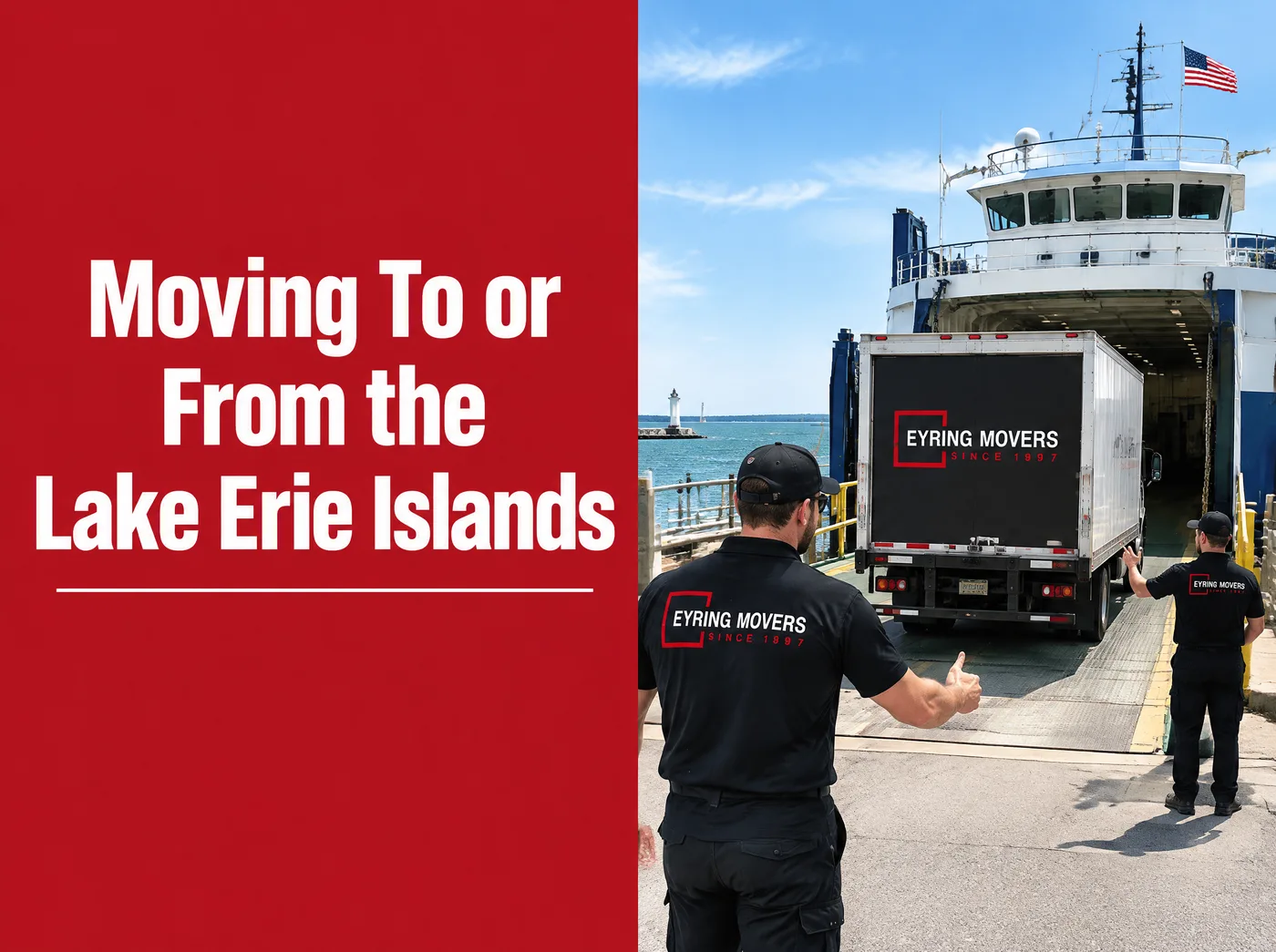
Moving To or From the Lake Erie Islands: Put-in-Bay, Kelleys Island, and Middle Bass
Planning a move to or from Put-in-Bay, Kelleys Island, or Middle Bass? Learn how ferries, timing, and logistics work and how to plan an island move.
Relocation Guide | Eyring Movers
Most people assume a moving truck will take whatever fits, but professional movers work under real restrictions on what they can legally and safely transport. Some of these rules come from federal transportation regulations, some from state agricultural laws, and some are simply common-sense liability decisions that any reputable company follows.
Knowing what falls into these categories before moving day arrives saves you from a last-minute scramble when your crew has to leave something behind. Here is what movers typically will not move, organized by category, along with what to do with each type of item instead.
This is the largest and most strictly enforced category, and it exists for genuine safety reasons, not convenience. Moving trucks are not equipped to transport materials that could ignite, explode, or leak dangerous fumes in an enclosed space over a long drive.
Items that fall here typically include propane tanks, gasoline and other fuels, motor oil, paint and paint thinner, aerosol cans, pool chemicals, pesticides, fireworks, ammunition, and chainsaw or lawn equipment fuel that has not been fully drained. Corrosive or flammable cleaning products often fall into this category too, even though they may seem harmless sitting under a kitchen sink.
The safest approach is to use up what you can before your move, and properly dispose of the rest through a local household hazardous waste program rather than tossing it in regular trash. Most counties run periodic collection events for this purpose, and many accept year-round drop-offs at designated facilities.
A few items surprise people because they do not look dangerous sitting in a garage or basement. Old paint cans, even ones that seem mostly dried out, are still classified as hazardous material until fully cured and solid. Car batteries and other lead-acid batteries fall into this category too, along with nail polish remover, bleach, and ammonia-based cleaners stored in bulk. Propane tanks for grills are one of the most commonly forgotten items on this list, since people focus on packing the grill itself and overlook the tank sitting beside it.
Scuba tanks, fire extinguishers, and any pressurized cylinder generally fall under the same restrictions as propane, since the risk profile during transport is similar. If you are unsure whether something in your garage counts as hazardous, a quick call to your mover before packing day is worth the five minutes, since guessing wrong means your crew has to leave it behind on moving day itself, often with little notice.
Movers generally will not transport perishable food, particularly on longer moves where a shipment might sit in transit for several days. Frozen and refrigerated items are the most obvious concern, but this often extends to opened packages of dry goods that could attract pests during a multi-day trip.
If you are moving locally, some movers will make exceptions for a cooler of essentials, but it is worth asking directly rather than assuming. For anything long-distance, plan to eat down your refrigerator and freezer in the weeks before your move, and donate unopened, non-perishable items you do not want to pack rather than letting them go to waste.
Plants are a surprisingly common source of confusion, since many people assume a favorite houseplant can simply ride along with everything else. Most movers will not transport plants on interstate moves, largely because many states enforce agricultural regulations designed to prevent the spread of pests and plant diseases across state lines. Some states, including parts of the West Coast and Florida, have particularly strict rules about what plant material can legally cross their borders.
For a local move, plants are usually fine to transport in your own vehicle, but they typically will not go on the moving truck itself due to temperature sensitivity and the risk of damage during loading. If you are moving a significant distance and cannot transport your plants yourself, propagating cuttings ahead of time or gifting mature plants to friends and starting fresh at your destination are both reasonable alternatives.
This one is universal. No professional moving company will transport pets, and any that offers to should be treated as a serious red flag. Pets need to travel with you directly, whether that means in your own vehicle for a local or regional move or via pet-specific transport services and airlines for a longer-distance relocation. Planning your pet’s travel arrangements early, particularly for a long-distance move, matters just as much as planning for your own belongings.
Movers are not necessarily prohibited from moving items like cash, jewelry, important documents, or family photos, but most reputable companies strongly advise against including them in the shipment, and many limit their liability for these categories. The reasoning is straightforward: these items are either irreplaceable or hard to value accurately if something goes wrong.
The safest approach is to hand-carry cash, jewelry, passports, birth certificates, financial records, and anything else you could not replace with an insurance check. This matters even more on a long-distance move, where your shipment may spend several days in transit and occasionally travels alongside other households’ belongings. A small fireproof bag or a dedicated tote you keep in your own vehicle works well for this purpose, and it is worth making a short list of exactly what goes in it before packing day so nothing gets left in a drawer by accident.
Firearms and ammunition fall under their own set of federal and state regulations, and most movers will not transport them as part of a standard household shipment. Ammunition in particular is typically treated as a hazardous material regardless of quantity. If you own firearms, plan to transport them yourself in accordance with your state’s transportation laws, or look into a specialty shipping service that handles firearms and understands the paperwork involved.
This one varies more than people expect. Some movers will transport a reasonable personal collection of wine or liquor without issue, while others decline because state-by-state liquor transport laws get complicated quickly on an interstate move. If you have a significant wine or liquor collection, ask your mover directly about their specific policy rather than assuming either way, since the answer depends on the company and the states involved.
Nearly every category on this list becomes more restrictive, not less, the farther your move travels. A local move within the same state has more flexibility for gray area items like plants or a small cooler of food, simply because the transit time is short and the regulatory patchwork of crossing state lines does not apply. Once you are moving across state lines, plan around these restrictions from the start rather than discovering them the week of your move. Eyring’s long-distance moving team can walk through exactly what applies to your specific route, since state-by-state agricultural and transport rules do shift depending on where you are headed.
The good news is that almost everything on this list has a straightforward solution once you know it is coming. Use up what you can, donate or properly dispose of what you cannot use, hand-carry your valuables and important documents, and make separate arrangements for pets, plants, and firearms well before moving day.
If you are planning a move and want to walk through what applies specifically to your situation, Eyring Movers is happy to answer these questions directly before you book. Contact our team with any specific items you are unsure about, and we can tell you exactly what to plan around.
No. Gasoline and other fuels are considered hazardous materials regardless of quantity, and reputable movers will not transport them under any circumstances. Drain fuel from equipment before your move and dispose of any remaining fuel through a local hazardous waste program.
Usually not, especially for long-distance or interstate moves, because of agricultural regulations in many states and the risk of temperature damage during transit. Local moves sometimes allow more flexibility, but plants generally travel best in your own vehicle.
Some movers allow a small cooler of essentials for local moves, but this varies by company and isn’t standard practice, especially for longer moves where transit time makes spoilage a real risk. Always ask directly rather than assuming.
Depending on the category, your options usually include using the item up before your move, donating it, properly disposing of it through a hazardous waste program, or transporting it yourself in your own vehicle if it is something irreplaceable like documents or jewelry.
Planning a move to or from Put-in-Bay, Kelleys Island, or Middle Bass? Learn how ferries, timing, and logistics work and how to plan an island move.
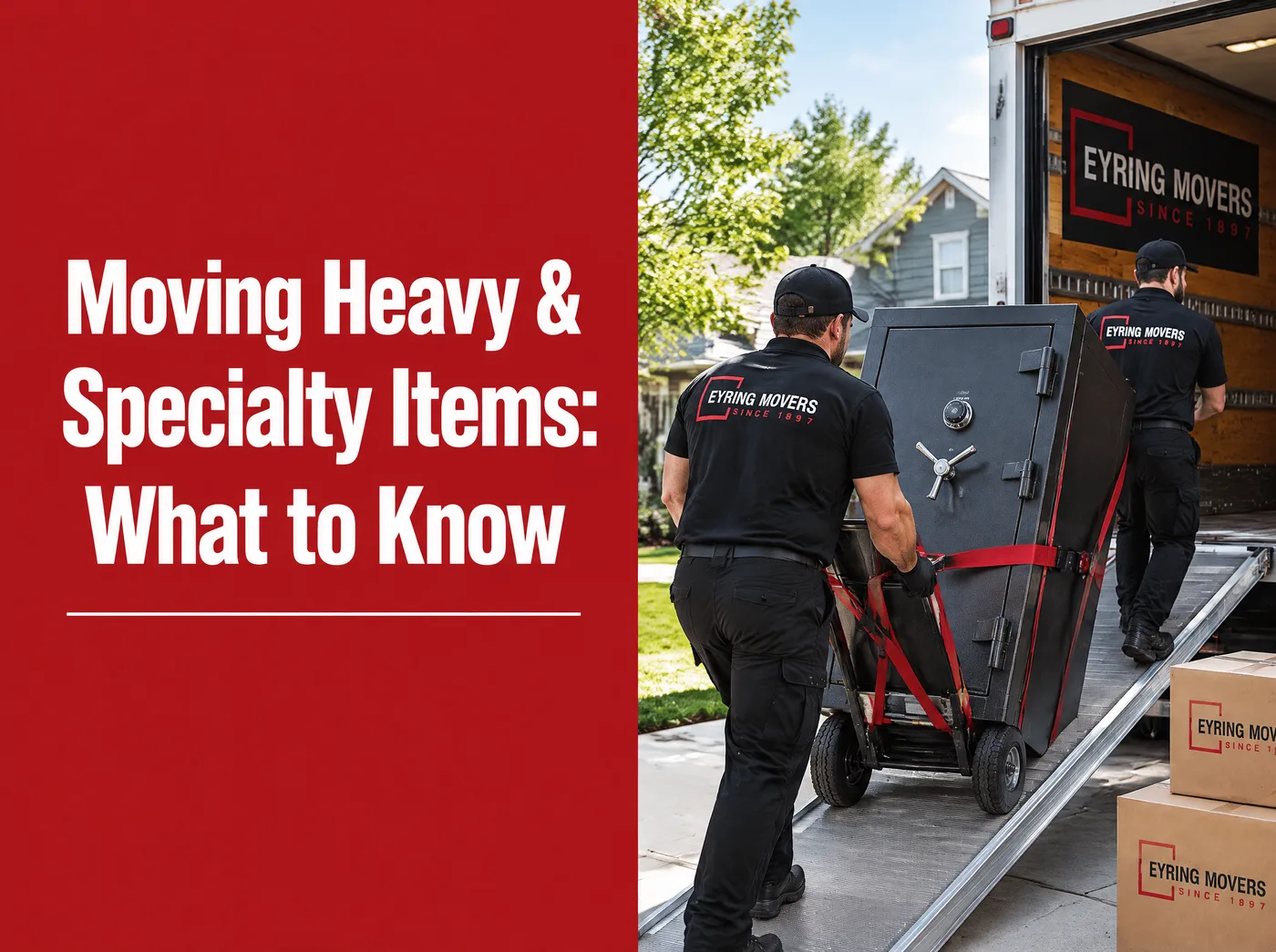
Need to move a safe, hot tub, pool table, or large appliance? Learn how heavy and specialty items are moved safely and what to tell your movers.

Helping a parent or yourself move later in life? Learn how to downsize, plan the timeline, and choose senior movers in Northeast Ohio with less stress.
Contact our team for a quote built around your timeline, seasonal or permanent.